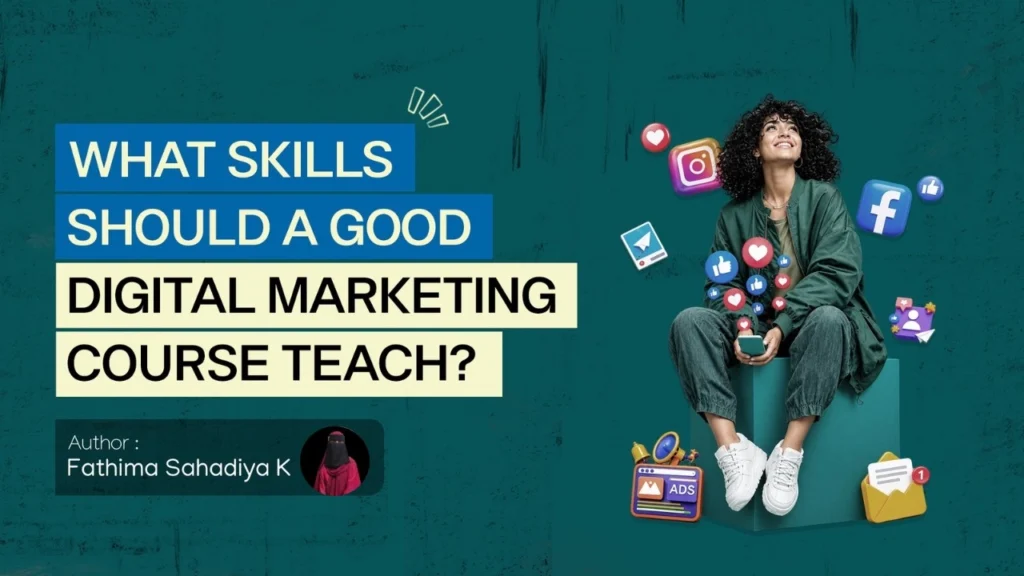
Choosing a digital marketing course can feel confusing. Every institute promises “job-ready training,” but when you look closely, some courses teach a lot and others only scratch the surface.
So how do you know what a course should actually cover? Here is a simple, honest checklist from someone who works in this field every day in Malappuram. Use it to judge any course before you pay.
1. SEO (Search Engine Optimization)
When someone searches on Google, SEO decides whether your business shows up or stays hidden.
A good course should teach you:
- How to find the right keywords
- On-page SEO (titles, headings, content, images)
- Technical basics like site speed and mobile-friendliness
- Local SEO, so shops and services get found by people nearby
- How to build quality backlinks
Why it matters: SEO brings free, long-term traffic. Once you learn it, you’ll always have a useful skill.
2. Social Media Marketing
Posting pictures is not a strategy. Real social media marketing means knowing who you’re talking to and why.
Look for lessons on:
- Building a content calendar
- Instagram, Facebook, LinkedIn, and YouTube strategy
- Reels, stories, and short video ideas
- Growing an audience and keeping them engaged
- Reading insights to see what works
Why it matters: Almost every business wants social media help, from small bakeries to big brands.
3. Paid Advertising (Google Ads and Meta Ads)
Organic growth takes time. Ads can bring customers faster, but only if you know how to spend wisely.
A solid course covers:
- Setting up campaigns from scratch
- Choosing the right audience
- Writing ad copy that gets clicks
- Setting budgets and bids
- Tracking cost per lead and return on investment
Why it matters: Businesses happily pay people who can bring results without wasting ad money.
4. Content Marketing and Copywriting
Content is the heart of digital marketing. Words, videos, and images are what make people stop, read, and trust you.
You should learn:
- How to write blogs, captions, and website pages
- Storytelling that connects with real people
- Writing headlines that make people curious
- Calls to action that actually get clicks
- Planning content around what your audience is searching for
Why it matters: Good content supports SEO, social media, email, and ads all at once.
5. Email and WhatsApp Marketing
Not everyone sees your posts, but many people check their inbox and WhatsApp daily.
A good course explains:
- Building a contact list the right way
- Writing emails people want to open
- Setting up simple automation
- Sending offers and updates without being annoying
Why it matters: It’s one of the cheapest ways to keep customers coming back.
6. Website Basics and WordPress
You don’t need to become a full developer, but you should understand how websites work, because most marketing leads to a website.
Useful topics include:
- Setting up a WordPress site
- Building landing pages that turn visitors into customers
- Basic design and user experience
- Site speed and security basics
Why it matters: If you can fix or build a simple site yourself, you stand out from other beginners.
7. Analytics and Reporting
Marketing without numbers is just guessing. You need to see what’s working and what’s not.
Make sure the course teaches:
- Google Analytics and Search Console
- Tracking clicks, leads, and sales
- Understanding which channels bring real results
- Creating simple reports clients can understand
Why it matters: Clients stay with marketers who can show clear proof of progress.
8. AI Tools for Marketing
AI is changing how marketers work, so any course that ignores it is already outdated.
Look for training on:
- Using AI for research, ideas, and first drafts
- Editing AI content so it sounds human and original
- Automating small repetitive tasks
- Knowing where AI helps and where human creativity is still needed
Why it matters: The goal isn’t to let AI do everything. It’s to work faster while keeping your own voice and judgment.
9. Personal Branding and Soft Skills
Skills get you in the door, but how you present yourself keeps you there.
A great course also helps with:
- Building a portfolio and social profile
- Communicating with clients
- Pitching your services with confidence
- Leading a team and managing projects
Why it matters: Many people can run an ad. Fewer can explain results clearly and earn a client’s trust.
10. Real Projects and Practical Training
This one matters most. Even the best syllabus is useless without practice.
A strong course gives you:
- Live projects on real websites or pages
- Assignments you can add to your portfolio
- Mentors who give honest feedback
- Chances to make mistakes and learn from them
Why it matters: Employers and clients want proof. A portfolio of real work speaks louder than any certificate.
Quick Checklist Before You Enroll
| Question to ask | Good sign |
| Is the syllabus up to date? | Includes AI tools and current platforms |
| Will I work on real projects? | Yes, with live campaigns or sites |
| Who are the trainers? | Active professionals, not just theory teachers |
| Can I see past student work? | Yes, with real results |
| Is there support after the course? | Guidance for jobs or freelancing |
Final Thoughts
A good digital marketing course doesn’t just teach tools. It teaches you how to think, test, and improve. Focus on practical skills, real projects, and honest mentors, and you’ll be ready for the opportunities growing across Kerala and beyond.
Thinking about starting your digital marketing journey in Malappuram? Reach out, and let’s find the right path for your goals.