Digital marketing has become one of the most popular career choices for students and fresh graduates. Many businesses are moving online, creating more opportunities for people who understand social media, search engines, content creation, and online advertising. Because of this growing interest, many beginners are joining digital marketing courses to build their careers.
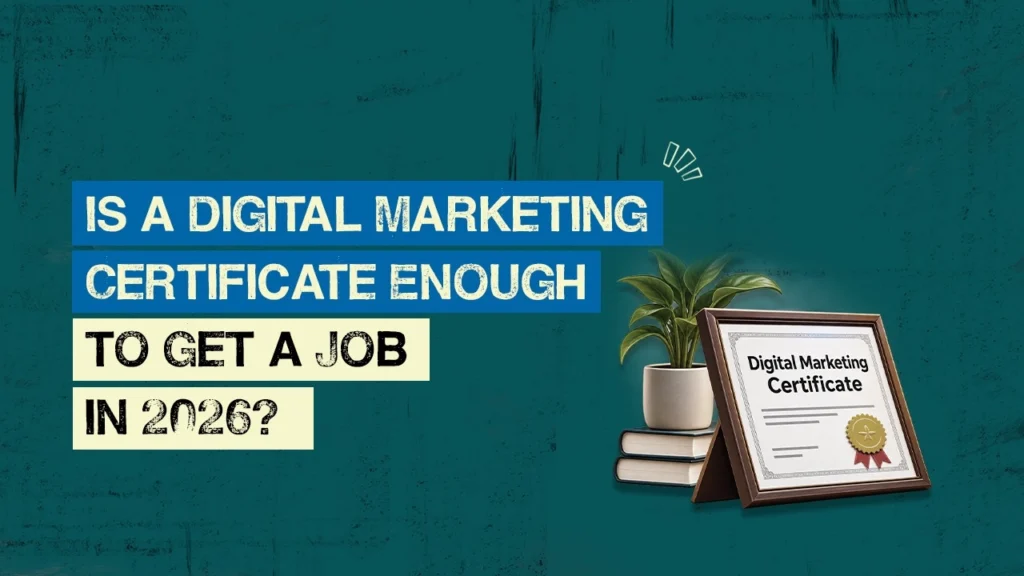
But one question often comes to mind: Is having a digital marketing certificate enough to get a job in 2026?
The short answer is no. A certificate can help you get started, but it cannot guarantee a job. Companies are not only interested in what course you have completed. They also want to know what you can actually do with the knowledge you have gained. Let’s understand why practical skills, experience, and continuous learning matter in today’s digital marketing industry.
1. What Does a Digital Marketing Certificate Actually Prove?
A digital marketing certificate shows that you have completed a course or training programme and learned the basics of the subject. It can introduce you to important areas such as Search Engine Optimization (SEO), social media marketing, Google Ads, content marketing, email marketing, and website management.
For beginners, a certificate is a good starting point. It gives you a clear learning path and helps you understand how different digital marketing activities work.
However, completing a course does not automatically mean you are ready to handle real business challenges. Knowing the definition of SEO is different from improving a website’s Google ranking. Similarly, learning about Instagram marketing is not the same as creating a content strategy that attracts customers.
That is why a certificate should be considered the beginning of your journey, not the final achievement.
2. Why Practical Skills Matter More Than Certificates Alone
Imagine two candidates applying for the same digital marketing position. Both have completed a digital marketing course. However, one candidate has only theoretical knowledge, while the other has created social media content, worked on a website, researched keywords, and practised running campaigns.
Which candidate would an employer find more interesting?
In many situations, the candidate with practical experience has an advantage because they can demonstrate what they have learned.
Businesses need people who can solve problems, understand customer behaviour, create engaging content, and improve online performance. These responsibilities require more than textbook knowledge.
Practical training helps students understand how marketing works outside the classroom. It also builds confidence and prepares them to handle tasks in a professional environment.
3. Important Digital Marketing Skills Employers Look For in 2026
The digital marketing industry continues to change, and employers look for candidates who can adapt to new platforms, tools, and customer expectations.
Here are some important skills worth developing:
Search Engine Optimization (SEO): Understanding keyword research, on-page SEO, technical SEO basics, and content optimization can help businesses improve their visibility on search engines.
Social Media Marketing: Businesses use platforms like Instagram, Facebook, and LinkedIn to connect with their audiences. Knowing how to plan content, manage accounts, and understand engagement is valuable.
Content Creation: Creating useful blog posts, captions, website content, and creative ideas is an important part of digital marketing.
Paid Advertising: Basic knowledge of Google Ads and Meta Ads can help you understand how businesses reach targeted audiences through paid campaigns.
Analytics and Reporting: Marketers should know how to understand website traffic, campaign results, engagement, and other performance indicators.
AI Tools and Digital Skills: AI-powered tools can support research, content planning, and everyday marketing tasks. Learning to use them responsibly while applying your own creativity and judgement can be an advantage.
You do not need to master everything at once. Start with the basics and gradually improve your skills through practice.
4. How Live Projects Help You Gain Experience
One of the best ways to improve your digital marketing knowledge is by working on real or realistic projects.
For example, you can create a social media content calendar for a local business, perform keyword research for a website, write an SEO-friendly blog, or prepare a basic digital marketing strategy for a small brand.
These activities help you understand how to apply your knowledge in different situations.
You can also start your own small project, such as a blog, Instagram page, or personal website. This gives you an opportunity to experiment with different strategies and observe the results.
Even small projects can teach you valuable lessons about audience behaviour, content performance, and online growth.
5. Build a Strong Digital Marketing Portfolio
A portfolio is a collection of your work that shows potential employers what you can do. It is especially useful for freshers who do not have professional experience yet.
Instead of simply mentioning your skills on a resume, include examples of your work.
Your portfolio could contain:
- SEO keyword research samples.
- Blog articles and website content.
- Social media designs and content calendars.
- Sample Google Ads or Meta Ads campaigns.
- Website optimization work.
- Basic performance reports and case studies.
If you have worked on personal projects or completed assignments during your course, you can include them too. Make sure you clearly mention whether a project was created for a real client, as a course assignment, or for practice.
A well-organized portfolio helps employers understand your abilities and gives them a reason to consider you for an opportunity.
6. How to Prepare for Your First Digital Marketing Job
Getting your first opportunity may take time, but having a simple plan can make the process easier.
First, choose the areas of digital marketing that interest you most. You might enjoy SEO, social media management, content creation, or paid advertising.
Next, practise using relevant tools and work on small projects. Create a professional resume that highlights your skills, training, and practical work. Keep your LinkedIn profile updated and connect with people working in the industry.
You can also apply for internships and entry-level positions. These opportunities help you understand workplace expectations and gain experience.
Most importantly, do not wait until you feel completely ready. Keep learning, practising, and applying for opportunities along the way.
7. Final Thoughts: Skills Matter Beyond the Certificate
So, is a digital marketing certificate enough to get a job in 2026? A certificate can make your learning journey easier and show that you have taken the initiative to develop your knowledge. But your practical skills, creativity, problem-solving ability, and willingness to learn are what help you stand out.
The best approach is to combine structured learning with hands-on experience. Work on projects, build a portfolio, explore different marketing tools, and stay updated with industry changes.
At Skillage Academy, students can focus on developing their digital marketing knowledge and building practical skills that support their career goals.
Remember, your certificate may open the first door, but your skills and the work you create can help you move forward in your digital marketing career.