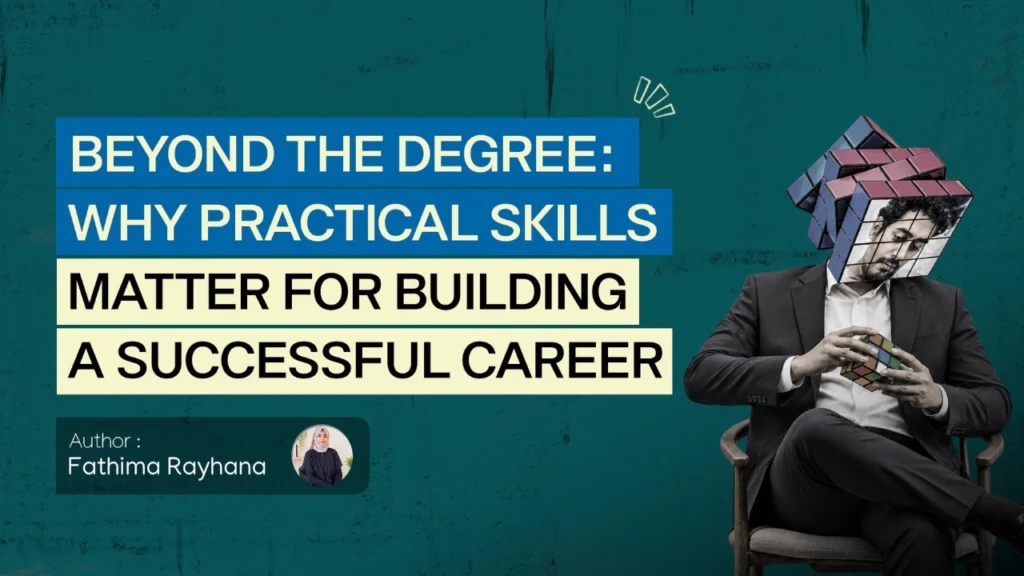
Education plays an important role in shaping our future. Students spend years studying different subjects, completing assignments and preparing for examinations. A degree gives them valuable knowledge and helps them understand their chosen field. But when it comes to finding a job, many graduates realise that academic knowledge alone may not be enough.
Have you ever wondered why some graduates find it difficult to get their first job even after completing their education? One important reason is the gap between what students learn in classrooms and what companies expect from employees. Employers are not only looking for qualifications. They also want people who can apply their knowledge, communicate clearly and handle real workplace responsibilities.
1. A Degree Is Only the Beginning
A degree can open the door to different career opportunities, but building a successful career requires continuous learning. For example, a student who studies business management may understand marketing concepts through textbooks. However, working on an actual marketing campaign requires additional knowledge and experience.
The same applies to many other career fields. Understanding a concept and using it in a real situation are two different things. Students need opportunities to practise what they learn and understand how their knowledge connects with everyday professional tasks.
This is why learning should not stop with completing a course or receiving a certificate.
2. Why Practical Experience Matters
Imagine two candidates attending the same job interview. Both have similar educational qualifications. However, one candidate has completed practical projects, worked with industry-related tools and gained experience through training.
The other candidate has mainly focused on theoretical learning.
Who might have an advantage?
In many situations, the candidate who can demonstrate practical knowledge may have a stronger opportunity to prove their abilities.
Practical experience helps students understand how tasks are completed, how problems are handled and how professional responsibilities work. It also gives them something meaningful to discuss during interviews.
Students can develop this experience through live projects, internships, assignments and hands-on training.
3. Skills Employers Look for Beyond Academic Knowledge
Technical knowledge is important, but employers also value several other skills when selecting candidates.
Some important skills include:
Communication Skills: Employees should be able to share ideas, communicate with colleagues and understand instructions clearly.
Problem-Solving: Workplace situations do not always have simple answers. The ability to identify problems and find suitable solutions is valuable.
Digital Skills: Technology is becoming part of almost every industry. Understanding relevant digital tools can help candidates work more efficiently.
Time Management: Completing tasks within deadlines and managing responsibilities are important parts of professional life.
Adaptability: Industries continue to change. People who are willing to learn new tools and improve their knowledge can adjust more easily.
Developing these skills alongside academic knowledge can help students become better prepared for different career opportunities.
4. Learning Through Real-World Projects
One of the best ways to improve practical knowledge is by working on real-world projects.
Instead of only reading about a subject, students can try completing small tasks related to their chosen career.
For example, someone interested in digital marketing can practise creating social media content, conducting keyword research, analysing website performance and developing marketing strategies.
These activities help students understand how different concepts work together. They also allow learners to build a portfolio that demonstrates their abilities.
Even small projects can become valuable learning experiences when students take them seriously.
5. Choosing the Right Skill Development Institute
Choosing where and how to learn is another important decision in a student’s career journey. Not every course provides the same learning experience. Before joining a training programme, students should understand what they will learn and how the training will help them develop useful skills.
Look for learning opportunities that focus on practical activities, updated knowledge, industry-relevant topics and guidance from experienced trainers.
A good learning environment should encourage students to ask questions, explore new ideas and practise what they learn.
For students looking for opportunities to improve their professional knowledge and abilities, Skillage Academy is one institute they can explore. Understanding an institute’s learning approach, training background and development focus can help students make a more informed decision about their education.
6. Continuous Learning Is the Key to Career Growth
Getting a job is an important achievement, but learning should continue even after entering the workplace.
Technology, customer expectations and industry requirements change over time. Skills that are useful today may need improvement tomorrow. Professionals who regularly update their knowledge can stay prepared for new responsibilities and career opportunities.
Students should develop a habit of learning beyond their academic syllabus. Online resources, practical assignments, workshops and professional training programmes can all support this process.
The important thing is to stay curious and be willing to improve.
Conclusion
A successful career is not built through academic qualifications alone. It requires a combination of knowledge, practical experience, communication and the ability to adapt to changing industry requirements.
Students should start developing these abilities before entering the job market. By choosing the right learning opportunities and gaining practical experience, they can build confidence and prepare themselves for future challenges.
Remember, a degree shows what you have studied, but your skills demonstrate what you can actually do. Invest in learning, practise regularly and take small steps towards becoming career-ready.